About Us
WebDesignVR works with both small and large companies to provide them with one-of-a-kind professional solutions for their businesses.
View More
WebDesignVR works with both small and large companies to provide them with one-of-a-kind professional solutions for their businesses.
View More
21 May 2026 Web development guide Admin
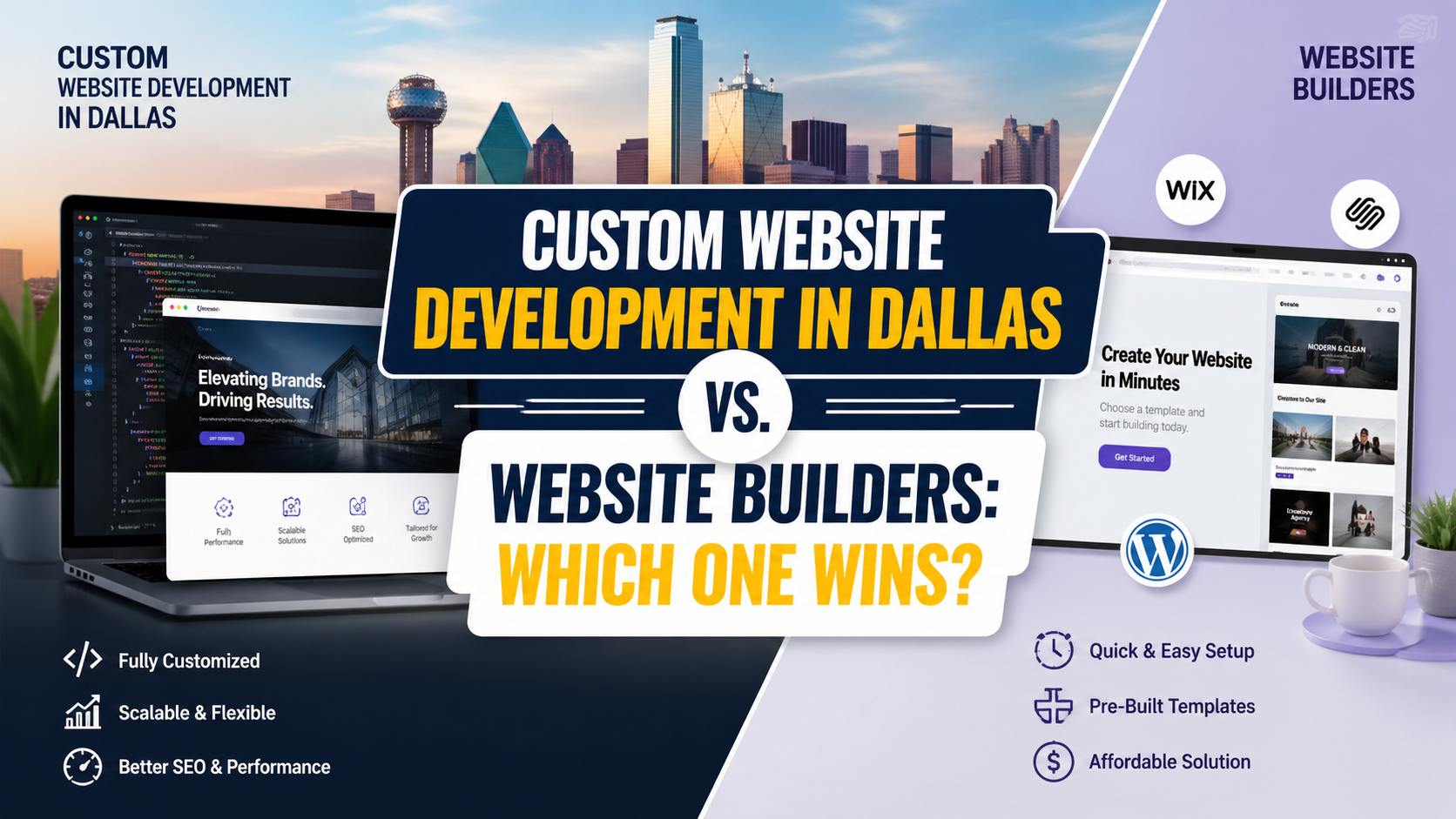
In a city as competitive and fast-moving as Dallas, your website is more than a digital business card; it’s your sales engine, brand authority, and growth platform. Whether you’re launching a startup in Uptown, scaling an eCommerce store, or modernizing a service business, one major decision shapes your online future: Should you invest in Custom Website Development in Dallas or use a website builder?
Website builders like Wix, Squarespace, and Shopify promise speed and affordability, while custom website development services in Dallas focus on performance, scalability, and long-term business growth. Modern builders can launch quickly and offer user-friendly tools, but they often come with design, SEO, and flexibility ceilings as businesses grow.
Before choosing, it’s important to understand what separates these two paths.
Website builders are pre-built platforms that allow businesses to create websites using drag-and-drop tools, templates, and limited customization. They’re designed for speed, convenience, and lower upfront cost.
Best for:
Custom website development services involve building your website from the ground up around your brand, goals, user journey, and technical requirements.
Best for:

For many businesses, the budget is the first deciding factor.
Most website builders offer low monthly plans, making them appealing for businesses wanting a quick online presence.
Pros:
Cons:
Custom websites cost more initially, but they often deliver better long-term value through stronger SEO, conversion optimization, and fewer platform limitations. Hidden builder costs can rise as businesses add SEO apps, booking systems, or advanced features.
Verdict:
If your only goal is to get online cheaply, builders win. If your goal is growth, custom website development often wins.
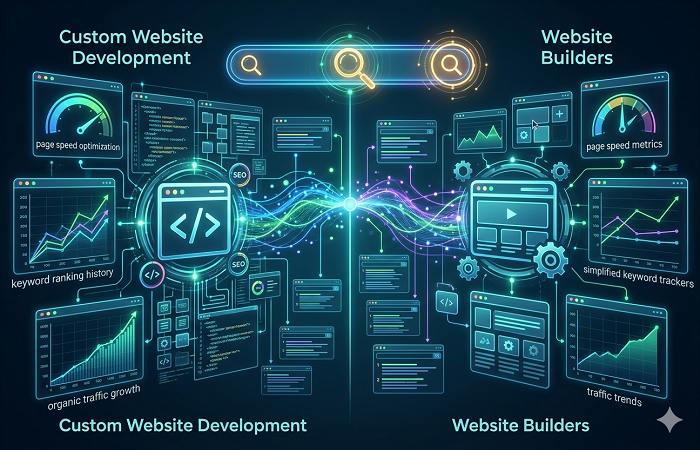
For businesses targeting competitive search terms like “Website Development Services in Dallas,” SEO is critical.
Many builders now offer decent SEO settings, including meta titles, mobile responsiveness, and blogging capabilities. However, code bloat, slower page speed, and limited backend control can affect technical SEO. Experts consistently emphasize scalability, SEO flexibility, and performance as key selection criteria.
With custom website development in Dallas, businesses gain:
For Dallas businesses competing in saturated industries, this can significantly impact rankings.
For aggressive SEO and lead generation, custom website development services in Dallas usually outperform builders.
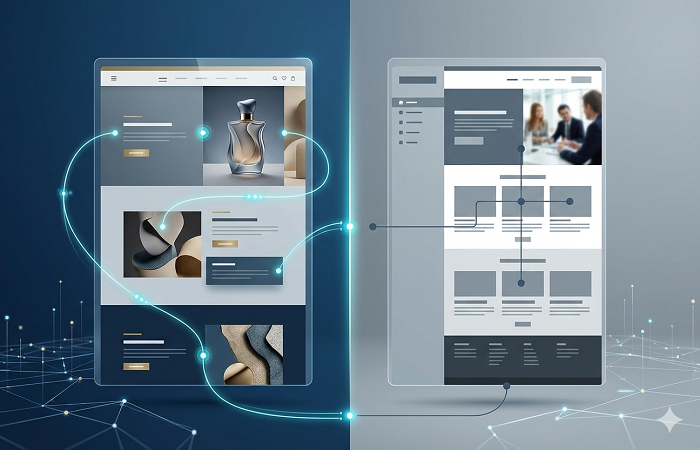
Dallas is full of businesses fighting for attention. A generic template may not be enough.
Templates can look polished, but many businesses end up with sites that resemble competitors.
Custom development creates:
Your business doesn’t just “look professional it becomes memorable.
Verdict:
For brand differentiation, custom wins.
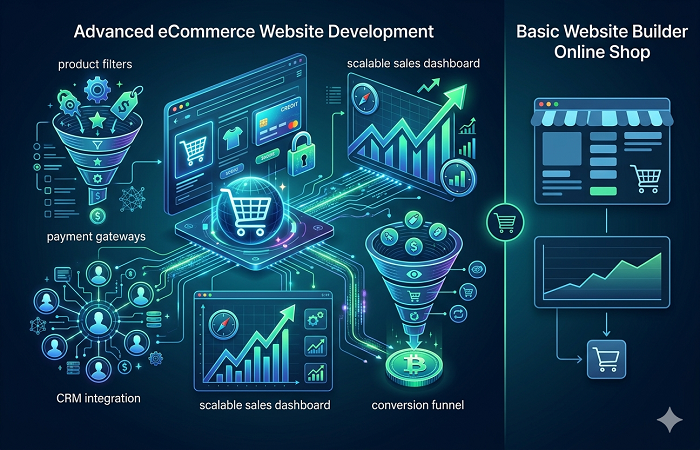
If you plan to sell products or services online, this category matters even more.
Platforms like Shopify are strong for simple stores and quick launches. Shopify remains a leading builder for e-commerce-focused sites.
Custom eCommerce development offers:
Dallas businesses planning serious online growth often outgrow standard builder ecosystems.
Verdict:
For simple stores, builders work. For scalable eCommerce development, custom wins.

This is where many Dallas businesses make expensive mistakes. A builder may work today, but what about 12 months from now?
As your business grows, you may need:
Custom platforms are built for growth, while builders often become restrictive. Many business owners report that builders work best for validation and simpler projects, while custom becomes more practical for advanced functionality and scaling.
If you’re building for tomorrow, custom website development in Dallas wins.
Website builders are a smart option if:
Here’s a simple breakdown to help Dallas businesses choose the right website solution for growth, SEO, and scalability:
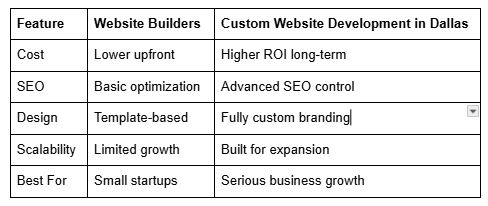
For many small businesses, website builders are a useful starting point. But for companies aiming to dominate competitive Dallas markets, custom website development services in Dallas often provide the stronger long-term advantage.
If your business vision is bigger than a template, custom website development is usually the smarter investment. In Dallas, where competition is fierce, the businesses that win online are often the ones that build beyond the basics.
What is the difference between custom website development and website builders?
Custom website development involves building a website specifically for your business goals, branding, SEO strategy, and scalability needs. Website builders like Wix or Squarespace use templates and drag-and-drop tools for faster, lower-cost launches but often come with customization and scalability limitations.
Is custom website development better for SEO in Dallas?
For businesses targeting competitive local terms like “Website Development Services in Dallas,” custom website development often provides stronger SEO advantages because it allows cleaner code, faster load speeds, advanced schema markup, and better technical optimization.
Are website builders good enough for small businesses?
Yes, website builders can be a smart option for startups, solo entrepreneurs, or small businesses that need an affordable, quick online presence.
Which option is better for eCommerce development: custom or website builders?
Website builders like Shopify can be effective for launching standard online stores quickly, especially for smaller catalogs.
When should a business choose custom website development services in Dallas?
A Dallas business should consider custom website development when SEO competitiveness, unique branding, advanced functionality, or long-term scalability are priorities.

Lorem Ipsum has been the industry's standard dummy text ever since the 1500s, when an unknown printer took a galley of type and scrambled it to make a type specimen book.